
For brands & sellers
AI-assisted creative for your shop
Persona-led explainers, UGC-style ad variations and language versions, scoped in a written proposal alongside our TikTok Shop services.
AI Realism · Creative production
Photoreal personas, AI-assisted UGC-style ads, multilingual cuts and faceless creator channels — planned by people, labelled where platforms require it, and built only on assets you have the right to use.
Custom-scoped and proposal-based. The inquiry is saved securely and answered by a person. No views, sales or earnings are guaranteed.

The finished AI-generated image, as it would run, with its label.
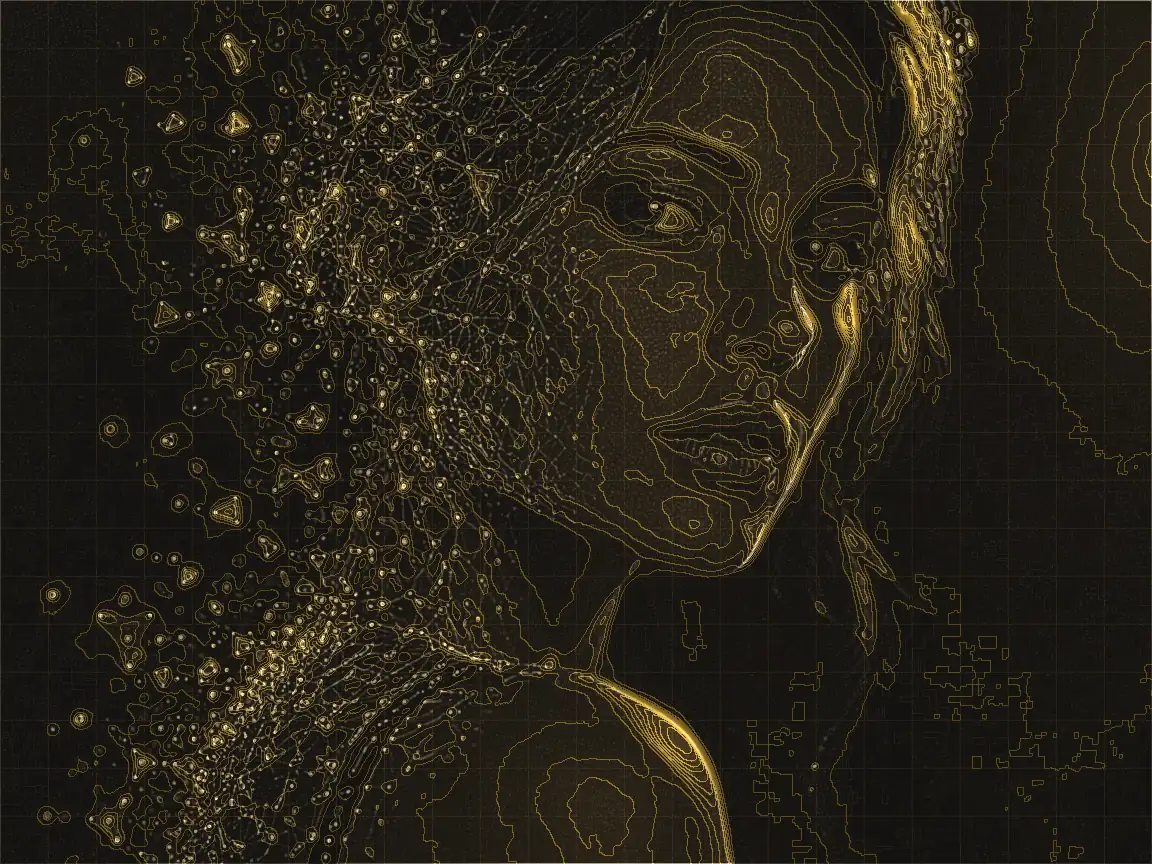
Conceptual visualization: a contour map drawn from the image’s own light and dark areas, to suggest how a synthetic portrait is built up. It isn’t depth data, a wireframe from the model, or anything the generator produced.
Example production notes, written for this page to describe the image. They aren’t the prompt, seed, settings or model used to make it.
Drag the lens, tap the portrait, or tab to the lens and use the arrow keys.
Three editorial pillars
Pick a pillar, then flip the picture to read the kind of brief it starts from. Every image here was generated with AI for this page and is labelled that way.

A fictional on-screen presenter or brand character, generated with AI, styled to your brand and kept consistent from post to post. Useful where a recurring face helps explain a product, and nobody real needs to be it.
Where it fits
The line we hold
A synthetic persona is never presented as a real person, customer or employee, and never modelled on anyone without their written consent.
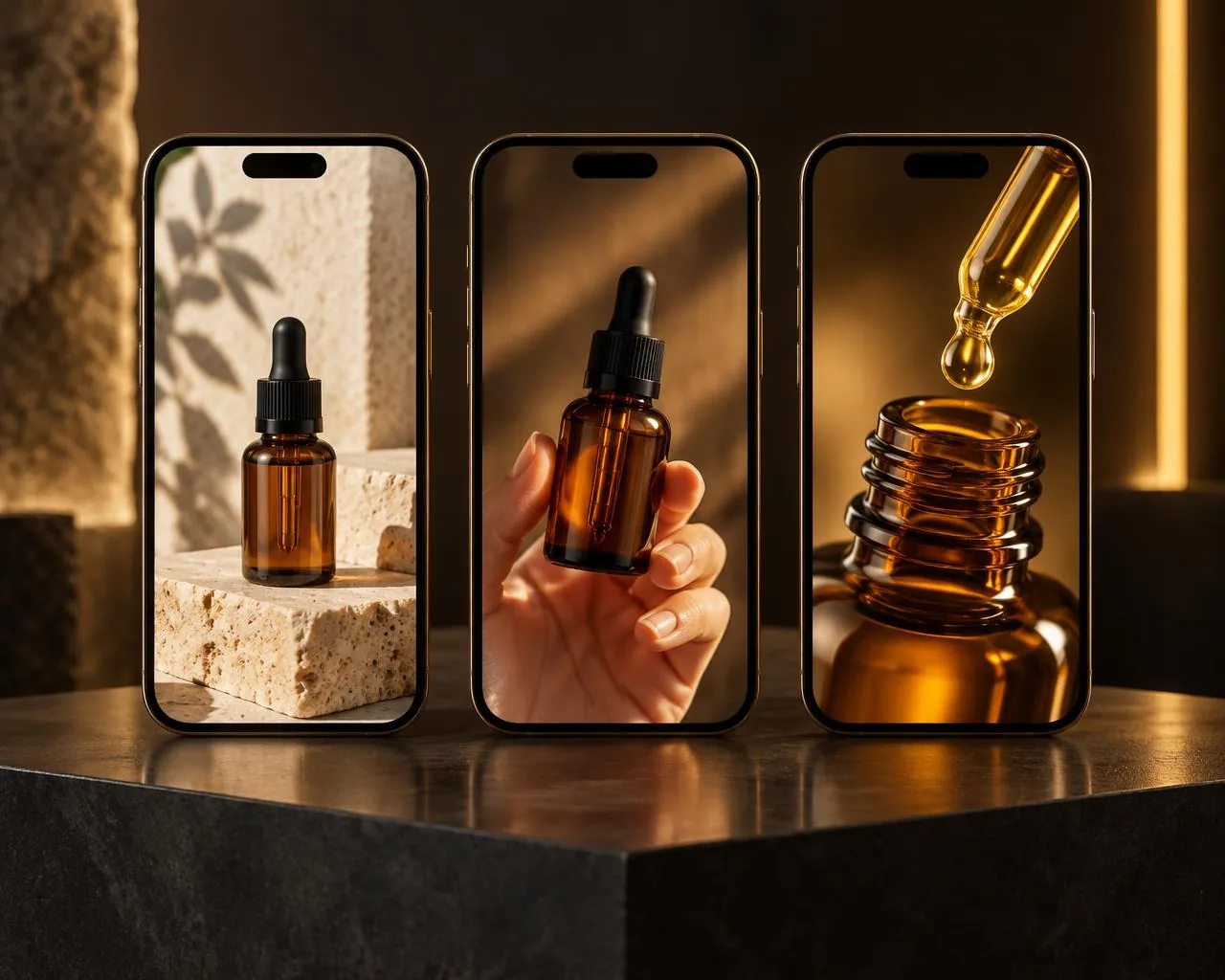
Short product ads in the native, phone-first style of creator content, where AI helps with script variations, scenes, cleanup, voice and translation, around real product facts and footage you approve.
Where it fits
The line we hold
“UGC-style” describes a format, not a customer. No AI ad speaks as a buyer who doesn’t exist, and every claim is one the product can support.

Channels built on voice, hands, screens, product and story instead of a face on camera, with AI as a production tool rather than a replacement for a real point of view.
Where it fits
The line we hold
Faceless isn’t anonymous to platforms or partners. Accounts, payouts, contracts and disclosures still belong to a real, identified person or business.
Illustrative concept · not a client project


Three drops. That’s the whole routine.
One approved line, four language cuts
Drag the frame to compare, or use the arrow keys. The caption is an example of how one approved script becomes several language versions with the same claims.
Micro-production studio
AI speeds up the making. People decide what gets made, what it says and whether it ships. Scrub the timeline to see where AI helps, what a person reviews, and what you receive.
Stage 1 of 5: Concept
Audience, product truth and the one idea worth testing. Before anything is made, we agree what the content may and may not claim.
AI execution
Research summaries, angle brainstorming and moodboard options.
Human review
You approve the claims list, the audience and the disclosure plan.
Output
A one-page creative brief.
Drag the timeline or use the arrow keys. Sound is off unless you turn it on; it’s a short tone made in your browser.
Licensed music and voices only, synthetic voices only with the speaker’s consent, and a human sign-off before anything ships.
The faceless creator economy
Hands, voice, screen, product and story can carry a channel. These are the four ways that channels usually get paid, with what each takes and where people get caught out.
Where Beacon fits: our creator network focuses on TikTok Shop affiliate and brand opportunities. It’s non-exclusive, and Beacon’s 20% applies only to Covered Opportunities in a signed agreement. YouTube and digital products are paths creators run themselves.
Exceptional, not typical
Some faceless creators run businesses that bring in six- and seven-figure revenue. They exist, and they are the exception. We don’t publish anyone’s numbers without documented proof, and we won’t hand you a dashboard screenshot as a promise.
Before you compare yourself to a headline, check which number it is. A “$1M creator” might mean $1M of GMV: at commission rates of 8–18%, that’s $80,000–$180,000 of commission, before a single cost.
Pick a niche, then set your own numbers. It shows the arithmetic, not a prediction.
Hypothetical example · not a client result, average, benchmark or forecast
Affiliate model Hands-on demos and comparisons of gadgets you’ve actually tested. Typical costs to count: Samples you buy, editing, music licences.
Production hours per month
24 pieces × 4 h × (1 − 50% AI-assisted × 25% assumed saving) = 84 h
Proof, not promises
We haven’t published an AI Realism case study yet, so there isn’t one here. No sample clients, made-up numbers or borrowed logos in the meantime. When a project is ready to share, it will meet every standard on this list.
The client agrees, in writing, to be named and to what we show.
Figures come from platform or sales reports we can show the client on request.
Each figure says whether it’s GMV, revenue or profit, and for which dates.
The case study says what was AI-generated and what was filmed.
No customer data, private messages or personal details, ever.
Case study 01
Reserved for a verified project
Not yet published
Case study 02
Reserved for a verified project
Not yet published
Case study 03
Reserved for a verified project
Not yet published
Real limitations
TikTok, YouTube and Meta each ask for, or apply, labels on realistic AI-generated or altered content. We follow each platform’s rules as they stand at posting, and paid partnerships are tagged.
No real person’s face, voice or name is generated, cloned or imitated without their written permission and agreed usage terms.
Music, fonts, footage, product images and AI tools are owned, licensed, or used within terms that allow commercial use.
AI never invents a customer, a review or a before-and-after result. The FTC’s rule on consumer reviews and testimonials prohibits fake ones, including AI-generated reviews.
Nothing that poses as a real creator, celebrity, brand or official account, and no synthetic persona presented as a real human.
No income, GMV or growth promises to brands or creators. Any figure we discuss is labelled hypothetical or comes with its source.
Platform rules and regulations change. This page summarises our standards; it isn’t legal advice.
Before we talk
Yes, wherever a platform requires or offers a label for realistic synthetic or altered content, and we tag paid partnerships. Platform rules change, so they’re checked for each campaign at the time of posting.
Only with that person’s written consent and agreed terms for how, where and how long their likeness or voice may be used. We don’t recreate anyone without it.
No. Reviews and testimonials have to come from real people with real experience. AI can help a real customer’s words read clearly with their permission; it can’t invent them.
It can, and for most people it doesn’t replace a salary. Results depend on niche, consistency, product fit and platform rules. We don’t promise earnings, views or sales.
Like all Beacon services, it’s proposal-based: scope, number of versions, languages and production needs set the price, in writing, before work begins.
It depends on the project, and we only use tools whose terms allow commercial use of the output. We’ll name them in your proposal rather than promise a specific tool here.
Two ways in
For brands & sellers
Persona-led explainers, UGC-style ad variations and language versions, scoped in a written proposal alongside our TikTok Shop services.
For creators
Join the non-exclusive creator network for TikTok Shop affiliate and brand opportunities, on written, creator-first terms.
Services are proposal-based. No views, sales, GMV, earnings or creator participation are guaranteed. All imagery on this page is AI-generated and illustrative, and does not show Beacon clients, creators or customers. The AI creative inquiry is stored securely so a person can reply; email links open a draft in your own email app and nothing is sent until you press send.
TikTok Shop Management ↗